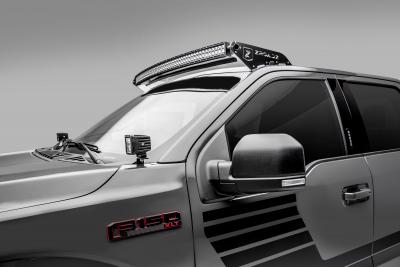
Driving in fog is one of the more dangerous conditions on the road: reduced visibility, unpredictable stopping distances, and headlights that often make things worse by bouncing light straight back at the driver. Fog lights solve a narrower problem than headlights do, and understanding that difference is the first step to choosing the right ones.
Shop the full LED fog lights collection for flood and combo beam options built for trucks, Jeeps and cars.
Why Fog Lights Work Differently Than Headlights
Fog sits close to the ground, and headlights aimed straight ahead bounce off the water droplets in front of the vehicle, scattering light back at the driver. Fog lights solve this three ways: they mount low, in or below the front bumper, so the beam stays under the densest part of the fog layer; they run a tightly controlled, downward-aimed beam, since a wide flood pattern (120 to 140 degrees) lit close to the road surface cuts through fog better than a narrow spot beam that creates glare and reflection; and many use an amber or yellow lens, since that light scatters less in fog, rain and snow than white light.
White vs Yellow vs Amber: Which Fog Light Color Should You Run?
This is the question we get most often, and the honest answer is that it depends on where you drive. White fog lights (5000K to 6000K) give the most natural color rendering and work well in light fog, rain, and general low-visibility driving. Yellow and amber fog lights (3000K to 4000K) reduce glare and reflection in dense fog specifically, at some cost to color accuracy. For a deeper look at how color temperature affects visibility across all your lighting, not just fog lights, see our Amber/Yellow vs. White LED Lights comparison.
Practically: if you drive somewhere with occasional light fog, white fog lights are the simpler choice and do double duty as general low lights. If you regularly drive through dense fog, snow, or dust, an amber or yellow lens is worth the tradeoff.
Fog Light Format: Pods vs Bars
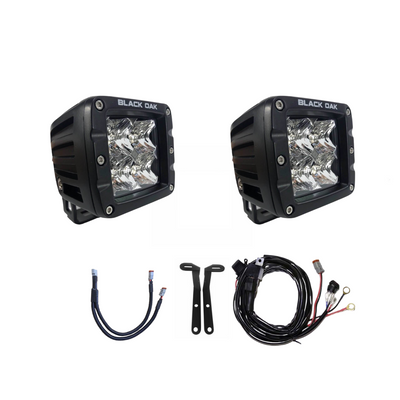
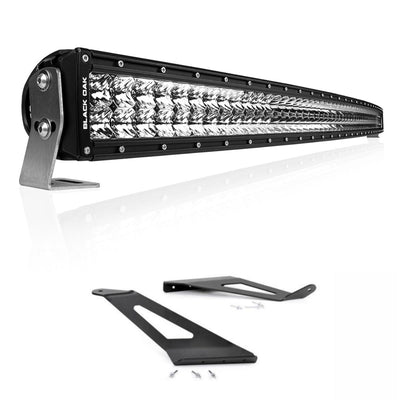
Fog lights come in two basic formats: small pod lights (2 to 6 inches) that mount individually in factory fog pockets or custom brackets, and single or double row light bars (10 inches and up) that mount across a bumper or grille opening. Pods are the more common fog light format because most factory fog light housings are sized for them, and a pair of 2 inch pods is enough for most passenger trucks and cars. Bars make more sense when you are replacing a full lower grille opening or want one continuous beam rather than two points of light. If you are deciding between the two for a build that also needs a primary light bar, our LED Pod Lights vs. LED Light Bars comparison covers the tradeoffs in more depth.
Beam Pattern: Flood, Not Spot
Fog lights should run a flood or combo pattern, never a narrow spot. A spot beam concentrates light at distance, which is exactly the wrong shape for fog: it throws light into the droplets in front of the vehicle and reflects it back. A wide flood pattern, 120 degrees or more, stays low and close, lighting the road surface without the glare. SAE J583 is the relevant standard for street-legal fog lights in the US: it specifies beam cutoff and aim so fog lights don't blind oncoming traffic. If street legality matters for your build, look for lights that specify SAE J583 compliance rather than assuming any aftermarket pod qualifies.
Upgrading From Factory Halogen Fog Lights
Most factory fog lights are still halogen, and there are two practical reasons to upgrade: output and lifespan. A typical halogen fog light bulb puts out somewhere in the 800 to 1,200 lumen range and needs replacing every 500 to 1,000 hours of use. A comparable LED pod puts out roughly 2,000 to 4,000 lumens per light and is rated for tens of thousands of hours, so it is a light you install once rather than a bulb you replace every year or two. The other reason to upgrade is fit: LED pods sized for your factory fog pocket bolt into the existing opening, so the swap does not require any bumper modification. That is the main advantage of a vehicle-specific kit over a universal one: the bracket is already shaped for your truck's factory opening.
Choosing Fog Lights by Vehicle
Most factory fog light housings are a known size, so a vehicle-specific fog light kit is the simplest path: it includes the pods, the correct mounting bracket for your factory opening, and a wiring harness sized for the install. We build kits for the most common platforms:
Ford fog lights
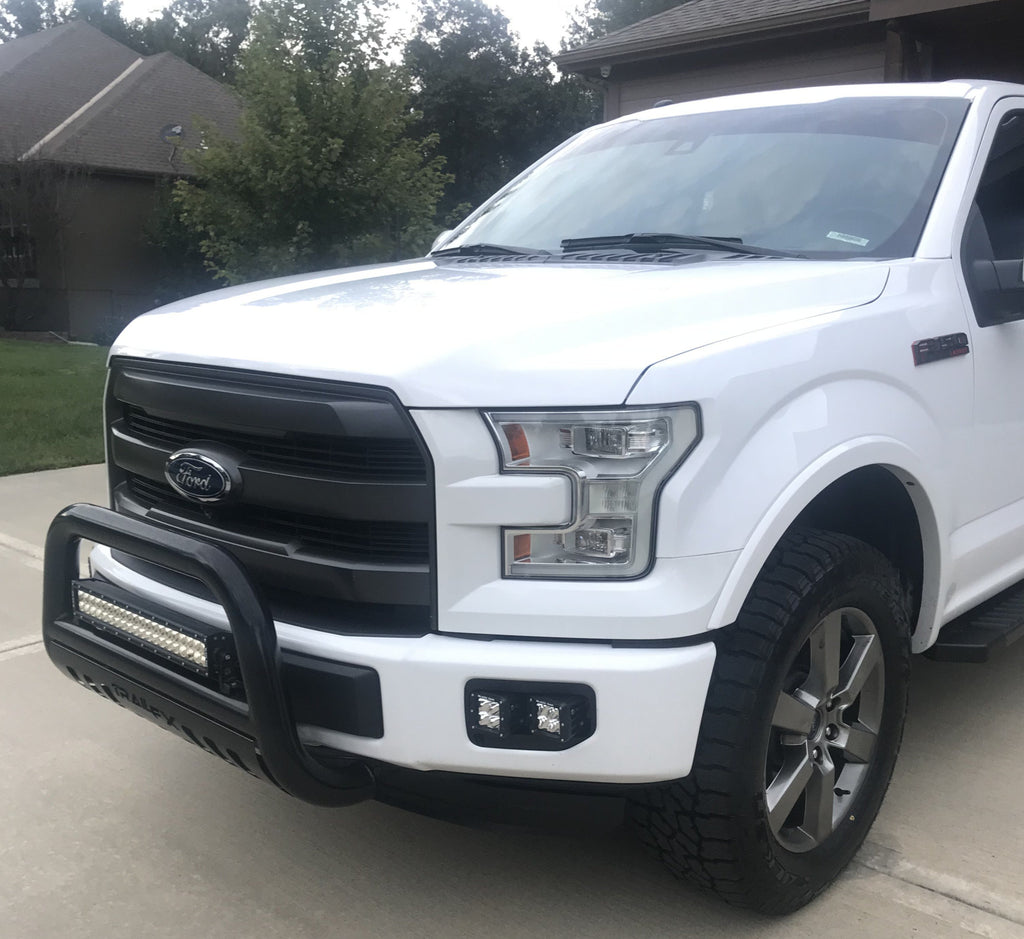
The F-150, Raptor and F-250 all take a factory-pocket pod kit. Browse F150, F150 Raptor and F250 lighting.
Chevy fog lights
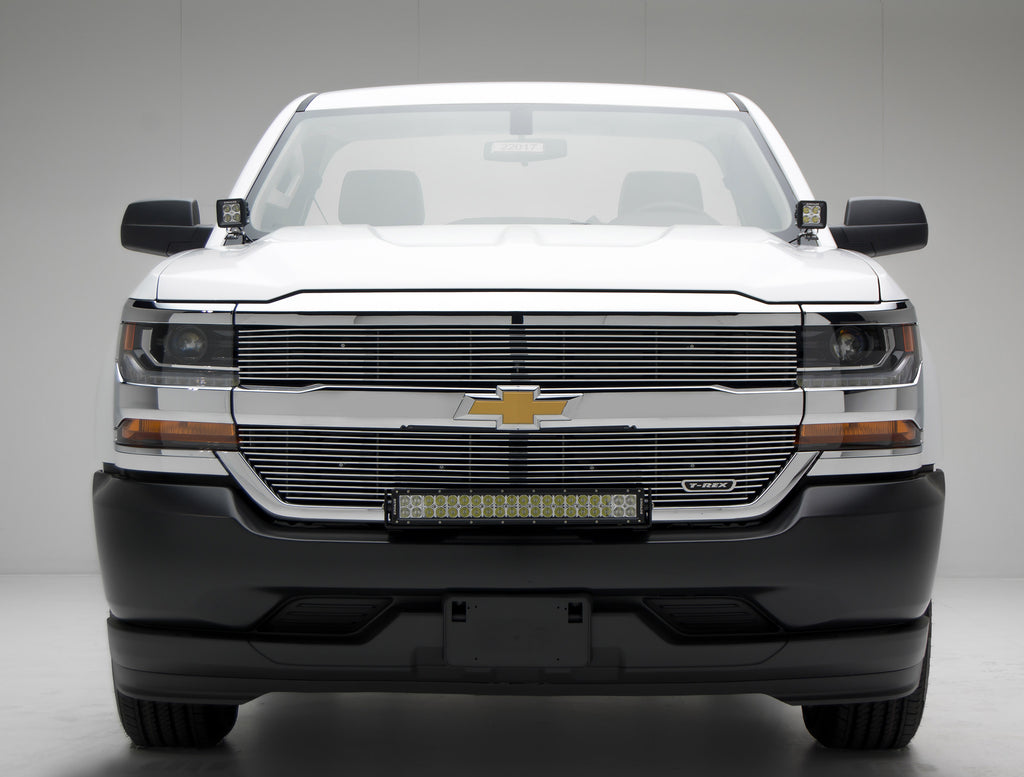
Silverado 1500 and 2500 owners can browse Silverado 1500 and Silverado 2500 lighting.
Dodge fog lights
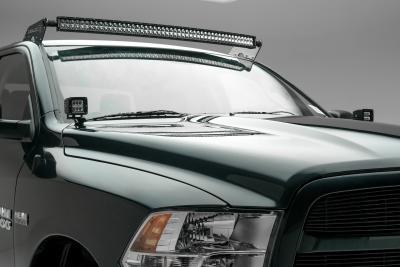
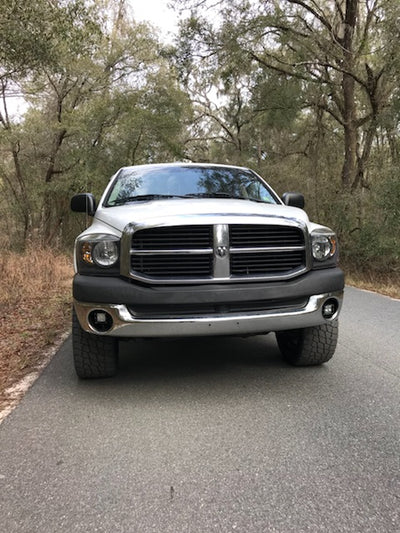
Ram 1500 and Ram 2500/3500 both have dedicated kits. Browse Ram 1500 and Ram 2500 lighting.
Jeep fog lights
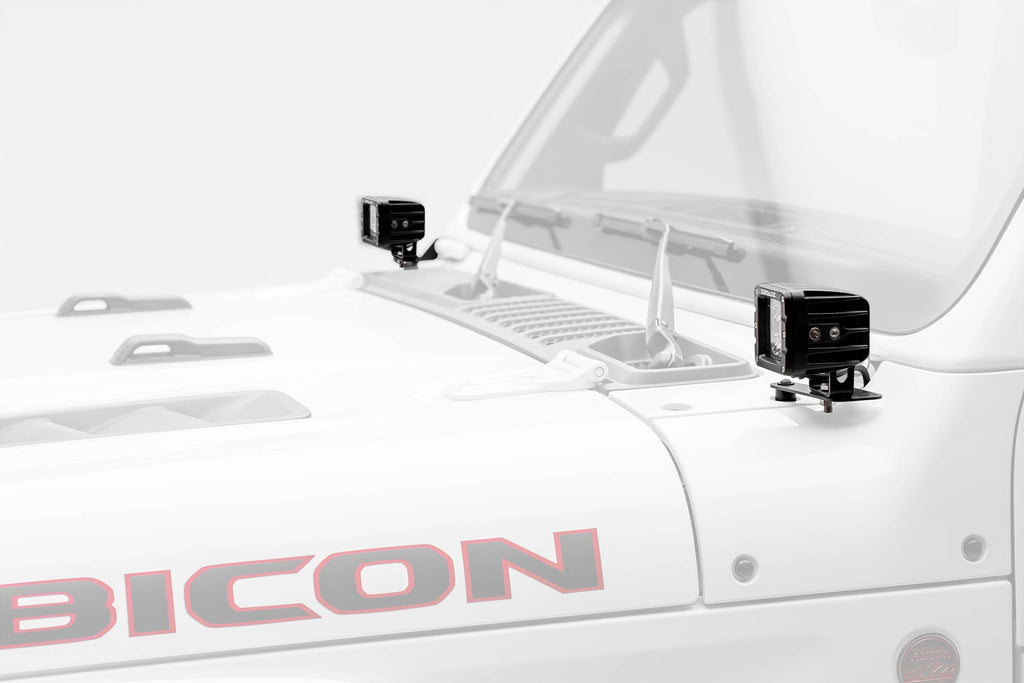
Wrangler JL, JK and TJ owners each have their own bracket set, since the factory opening shape changed across generations. Browse JL Wrangler, JK Wrangler and TJ Wrangler lighting.
GMC fog lights
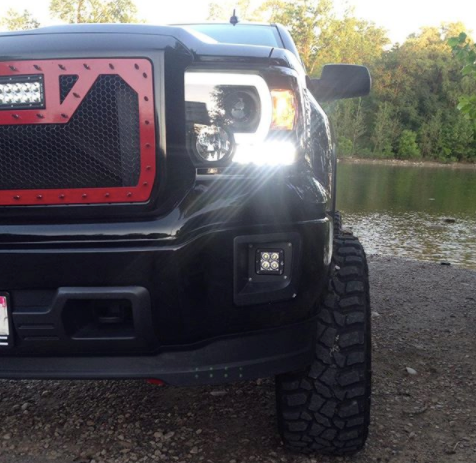
Sierra 1500 and 2500 kits share fitment with the equivalent Silverado. Browse Sierra 1500 and Sierra 2500 lighting.
Toyota fog lights
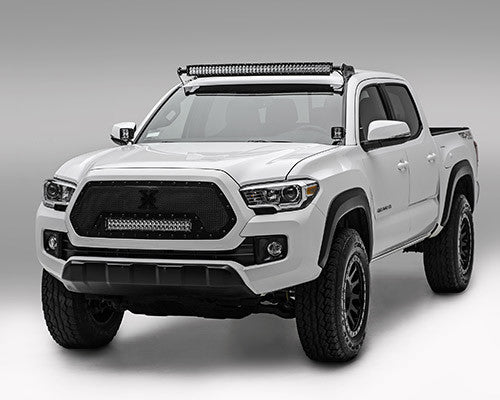
Tacoma and Tundra owners have model-specific options. Browse Tacoma and Tundra lighting.
If your vehicle isn't listed, a universal 2 inch or 4 inch pod pair with adjustable mounting brackets is the fallback: it takes more fabrication to mount but fits nearly any bumper or grille opening.
Installation Basics
LED fog lights draw less current than the halogen bulbs they usually replace (roughly 20 to 60 watts per light versus 55 to 100 watts for halogen), but they still need a relay and a fused circuit rather than a direct tap into an existing fog light wire. Vehicle-specific kits include the relay, fuse and switch already sized for the lights; if you are wiring pods into a factory fog light socket without a full kit, add a relay rather than wiring the pods directly to the factory circuit. Aim matters as much as the light itself: fog lights should point slightly down, roughly 25 feet ahead of the vehicle, not level with the horizon. An improperly aimed fog light loses much of its effectiveness and can blind oncoming drivers.
Frequently Asked Questions
Do I need 12V or 24V fog lights? Most passenger trucks and cars run 12V electrical systems. Larger commercial trucks may run 24V. Check your fog lights' rated voltage range before wiring them in; a light rated for a wide voltage range (for example 10 to 30V DC) will work on either system without extra parts.
Are amber fog lights legal everywhere? Fog light color and mounting height are regulated at the state level in the US, similar to other auxiliary lighting. SAE J583 compliance is the baseline to look for regardless of color. If you're unsure about your state's specific rules, check with your local DMV before a permanent install.
Can I run fog lights and a light bar at the same time? Yes, they solve different problems. Fog lights are a low, wide, close-range beam for poor visibility conditions. A light bar is typically mounted higher and aimed farther out, for distance visibility on unlit roads or trails. Many trucks run both on separate switches.
How long does a fog light installation take? A vehicle-specific kit that reuses the factory fog pocket typically installs in one to two hours with basic hand tools. A universal kit that requires custom bracket fabrication takes longer.
The Short Version
White fog lights (5000 to 6000K) for general low-visibility driving; yellow or amber (3000 to 4000K) for dense fog, snow, or dust. Flood or combo beam pattern only, never a narrow spot. Mount low, in or below the bumper, and aim slightly downward. A vehicle-specific kit is the simplest path if one exists for your truck; a universal pod pair with adjustable brackets covers everything else. Every fog light in our collection carries an IP69K waterproof rating and ships with mounting hardware and a wiring harness. Designed and engineered in Sarasota, Florida.
Browse the full LED fog lights collection to see current pod and bar options by size and color.