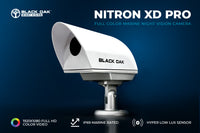
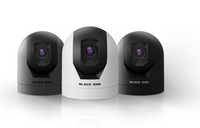
Experience unparalleled clarity and safety on the water with Black Oak LED's advanced marine night vision camera systems. Our innovative Nitron series cameras, specifically engineered for marine environments, utilize state-of-the-art ultra-low-light sensors and customized infrared lighting solutions to deliver unmatched nighttime visibility for navigation, fishing, and security applications.
Understanding Marine Night Vision Technology
Marine night vision cameras are specialized imaging systems designed to capture clear video in extremely low-light conditions on the water. Unlike standard security cameras or automotive systems, these professional marine camera systems must withstand harsh saltwater environments, constant vibration, and extreme temperature variations while delivering the visibility needed for safe navigation in complete darkness.
Modern marine night vision technology uses ultra-low-light sensors that amplify available starlight and moonlight, creating high-resolution color images in near-total darkness. When enhanced with infrared illumination, these boat camera systems provide clear imaging even in complete darkness, allowing boaters to identify navigation markers, floating debris, other vessels, and potential hazards that would be invisible to the naked eye or standard thermal cameras.
The marine environment presents unique challenges that general-purpose cameras cannot handle:
-
Constant saltwater spray requiring IP69K waterproof protection
-
Corrosive conditions demanding marine-grade materials and coatings
-
Humidity and temperature extremes necessitating nitrogen-purged housings
-
Integration requirements with existing chartplotters and marine electronics
-
Reliable performance from protected harbors to rough offshore seas
Why Night Vision for Boats Transforms Marine Safety
When it comes to navigating in the dark, the ability to see clearly is crucial for safety and confidence. Marine night vision cameras provide significant advantages for boating, fishing, security monitoring, and emergency response operations that traditional lighting cannot match.
Enhanced Safety and Situational Awareness: Night vision for boats allows you to detect obstacles, floating debris, other vessels, and navigation markers far beyond the range of standard running lights or spotlights. This extended visibility gives you time to react and adjust course safely, preventing collisions and groundings that could occur in darkness.
Superior Navigation Capability: Unlike relying on instruments alone, a boat night vision camera provides visual confirmation of your surroundings. You can identify specific channel markers, read buoy numbers, spot bridge pilings, and navigate tight channels with confidence even on moonless nights or in heavy fog conditions where visibility is severely limited.
Full-Color Imaging Advantage: Our Nitron XR1 Color Marine Camera and Nitron XD systems deliver full-color imagery rather than monochrome displays. Color provides superior contrast and object recognition - you can distinguish red and green navigation markers, identify vessel lighting patterns, and recognize natural versus man-made objects with clarity that monochrome thermal or green-screen night vision cannot match.
Complete Darkness Operation: When enhanced with integrated infrared illumination systems, Black Oak LED night vision cameras operate effectively in total darkness. Whether navigating under bridges, in shadowed areas, or during moonless nights, your marine IR lighting ensures consistent visibility when you need it most.
Why Choose Black Oak LED Marine Night Vision Systems?
Integrated IR Illumination - A Black Oak LED Exclusive
Our specialized infrared light systems are meticulously engineered to complement and amplify the capabilities of our Nitron night vision cameras, enhancing your visibility beyond standard night vision systems. As a veteran-operated LED lighting company with extensive marine lighting experience, we understand how to optimize IR wavelengths, beam patterns, and power output for maximum camera performance.
Black Oak LED offers integrated IR lighting packages at 850nm and 940nm wavelengths specifically tuned for our Nitron cameras. This integration is unique in the marine camera market - competitors don't offer custom IR systems designed specifically for their cameras, leaving boaters to source separate lighting solutions that may not be optimized for camera sensor sensitivity.
Complete System Approach: Our Nitron XR1 systems are available with four IR configuration options providing different power levels and mounting configurations for various vessel sizes and applications. This allows you to select the marine camera system that matches your specific navigation requirements rather than settling for a one-size-fits-all approach.
Superior to Thermal Imaging in Real-World Marine Conditions
Unlike traditional marine thermal cameras, our night vision technology provides clearer and more detailed images, helping you identify obstacles, navigation markers, and hazards with precision in complete darkness or challenging conditions where thermal imaging struggles.
Resolution Advantage: Black Oak LED Nitron cameras deliver 1280x1024 high-resolution color imaging compared to thermal cameras' typical 320x240 monochrome displays. This 16x pixel advantage translates directly to your ability to identify specific objects, read navigation markers at distance, and navigate with precision rather than interpreting fuzzy heat signatures.
Temperature-Independent Performance: Thermal cameras require significant temperature differences between objects and their surroundings to function. In marine environments, this creates serious limitations during early morning navigation when water temperature and floating object temperatures equalize, making channel markers, debris, and even other vessels invisible to thermal systems. Our ultra-low-light cameras with IR enhancement maintain consistent performance regardless of ambient temperature conditions.
Cost Efficiency: Professional ultra-low-light systems with integrated IR cost $1,495-$3,744 compared to $4,000-$5,000+ for thermal alternatives, while delivering superior resolution and detail for typical marine navigation, fishing, and cruising scenarios.
Veteran-Operated Quality and Marine Expertise
Proven Marine Construction: As a veteran-operated company with extensive experience manufacturing marine lighting systems that operate reliably in the harshest saltwater conditions, we understand what it takes to build electronics that survive and perform on the water. This marine-focused engineering expertise ensures your Nitron system delivers reliable operation season after season.
Military-Grade Standards: Our veteran-operated company brings military-grade quality standards and attention to detail that ensures your night vision system performs when conditions are challenging and reliability matters most. We understand mission-critical equipment because we've operated it ourselves in demanding environments where failure wasn't an option.
Choosing the Best Marine Night Vision Camera System
Key Features That Matter for Marine Applications
Resolution and Image Quality: Professional marine cameras should provide 1280x1024 resolution or better for clear object identification at distance. Higher resolution allows you to read navigation markers, identify floating debris, and spot other vessels with precision. Full-color imaging provides superior contrast and object recognition compared to monochrome thermal displays common in competing systems.
Integrated Infrared Illumination: While ultra-low-light cameras work effectively in starlight and moonlight conditions, integrated IR illumination extends visibility in complete darkness and enhances performance under bridges, in fog, or during moonless nights. Black Oak LED's unique advantage is custom-engineered IR lighting systems specifically optimized for our Nitron camera sensors.
Marine Durability Standards: IP69K waterproof rating represents the highest international protection standard, ensuring your camera withstands high-pressure washdown, constant spray, and submersion. Nitrogen-purged housings prevent internal fogging during temperature changes, while marine-grade materials resist saltwater corrosion for years of reliable operation in harsh environments.
System Integration Capability: Seamless connectivity with your chartplotter and multifunction display (MFD) is important for many boaters. Professional boat camera systems should support standard marine video protocols and integrate with major MFD brands including Garmin, Raymarine, Simrad, and Furuno for convenient display integration.
Understanding Marine Camera Pricing and Value
| Price Range |
System Type |
What You Get |
Best For |
| $1,500-$2,000 |
Entry-Level |
Basic ultra-low-light camera, 720-1080p resolution, basic connectivity |
Recreational boaters in light-rich environments, weekend use |
| $2,000-$3,500 |
Professional |
1280x1024+ resolution, IP-rated protection, integrated IR packages |
Serious boaters, commercial operators, challenging conditions |
| $4,000-$5,000+ |
Premium Thermal |
Thermal imaging, 320x240 resolution, pan/tilt, AI analytics |
Specialized heat signature detection, commercial/military use |
Black Oak LED Nitron camera systems fall into the professional category, delivering high-resolution color imaging, IP-rated protection, and custom IR illumination packages designed specifically for marine applications at competitive pricing compared to thermal alternatives.
Application-Specific Recommendations
Intracoastal and Inland Waterways: Ultra-low-light cameras excel where ambient light from shore, bridges, and navigation markers provides baseline illumination. Integrated IR systems like our Enhanced IR and Enhanced IR Plus configurations extend visibility in darker channels and under bridges where shadows create navigation challenges.
Offshore and Open Water: Professional systems with both ultra-low-light sensors and powerful integrated IR provide maximum versatility for extended passages and offshore navigation. Our Low Pro IR and Low Pro IR Extreme configurations deliver the power needed for total darkness operation far from shore.
Commercial Fishing and Charter Operations: Full-color imaging helps identify specific objects - nets, lines, markers, other vessels, floating debris - that monochrome thermal displays make difficult to distinguish. Night fishing operations benefit from the detail and clarity that ultra-low-light technology provides without thermal imaging's temperature-dependent limitations.
Marine Security and Docking: For boat security monitoring at the dock or safe docking operations in darkness, marine security cameras with night vision provide clear surveillance and docking assistance. The color imaging helps identify specific vessels, people, and activities that security applications require.
Understanding Nitron Camera System Configurations
Black Oak LED offers the Nitron XR1 Color Marine Camera in four integrated IR configurations, allowing you to match your boat camera system to your specific vessel size, navigation environment, and visibility requirements.
System Configuration Comparison
| Configuration |
Effective Range |
IR Power |
Best Applications |
Vessel Size |
Price Range |
| Base Camera Only |
Ambient dependent |
None |
Testing, light-rich areas |
Any |
$1,495 |
| Enhanced IR |
100-150m darkness |
Standard |
Intracoastal, bays, rivers |
25-40' |
$1,668 |
| Enhanced IR Plus |
150-200+m darkness |
Increased |
Mixed coastal/offshore |
35-50' |
$1,754 |
| Low Pro IR |
200-250m darkness |
Professional |
Offshore, commercial use |
40-60+' |
$1,927 |
| Low Pro IR Extreme |
250+m darkness |
Maximum |
Extreme conditions |
50+' |
$2,099 |
| Nitron XD Pro |
Premium range |
Premium system |
Professional operations |
Large vessels |
$2,808 |
Nitron XR1 Base System (Camera Only)
What's Included: Nitron XR1 ultra-low-light color camera with marine-grade housing, mounting hardware, and power/video cables
Best For: Boaters who already have compatible IR lighting installed or who navigate primarily in areas with sufficient ambient light (well-lit harbors, intracoastal waterways with shore lighting). This configuration works well for those who want to add IR capability later or who are testing night vision technology for the first time.
Lighting Consideration: While the Nitron XR1 camera operates effectively in moonlight and starlight conditions, performance in total darkness (under bridges, moonless nights, offshore passages) will be limited without supplemental IR illumination.
Enhanced IR System Configuration
Best For: Recreational boaters navigating intracoastal waterways, bays, rivers, and coastal areas where moderate IR supplementation enhances camera performance. This configuration provides excellent visibility for vessels 25-40 feet operating in mixed lighting conditions where some ambient light exists but darkness creates navigation challenges.
Visibility Range: Enhances camera effective range to 100-150 meters in total darkness, with extended performance in low-light conditions. Perfect for weekend cruisers, fishing boats, and coastal navigation where reliable nighttime visibility improves safety and confidence without requiring maximum power consumption.
Enhanced IR Plus System Configuration
Best For: Serious cruisers and fishing vessels requiring greater IR range and coverage for larger operating areas. This configuration suits vessels 35-50 feet navigating mixed environments from protected waters to coastal offshore passages where extended visibility range is valuable for safety and situational awareness.
Visibility Range: Extends effective camera range to 150-200+ meters in complete darkness, providing earlier obstacle detection and greater navigation confidence. The increased IR power also improves performance in challenging atmospheric conditions like fog, haze, or heavy weather where light scattering reduces visibility.
Low Pro IR System Configuration
Best For: Offshore cruisers, commercial operators, and professional mariners requiring maximum visibility range in total darkness. This configuration is designed for vessels regularly operating far from shore where no ambient light exists and reliable long-range visibility is critical for safety. Suitable for vessels 40-60+ feet with electrical systems capable of supporting higher IR power draw.
Visibility Range: Professional-grade IR system extends camera effective range to 200-250+ meters in complete darkness, providing the earliest possible obstacle detection for safe navigation at cruising speeds. This configuration is recommended for overnight passages, commercial fishing operations, and charter vessels where professional-grade performance justifies the investment.
Low Pro IR Extreme System Configuration
Best For: Professional mariners, commercial operators, and expedition cruisers requiring absolute maximum night vision performance. This configuration represents our most powerful integrated IR system, designed for vessels 50+ feet operating in the most challenging conditions where visibility limitations could compromise safety or operations.
Visibility Range: Maximum-power IR system extends camera effective range to 250+ meters in complete darkness, providing exceptional early warning of obstacles and hazards. This configuration excels in extreme conditions including heavy weather, dense fog, and total darkness offshore where lesser systems may not provide adequate visibility for safe high-speed navigation.
Power Consideration: The Extreme system requires robust electrical capacity. Ensure your vessel's electrical system can support the additional power draw, particularly for extended operation.
Marine Night Vision vs Thermal Imaging: Technical Comparison
Thermal imaging has been common in the night vision world for many years. While there are advantages to thermal technology in some scenarios, significant disadvantages exist for typical marine navigation applications where ultra-low-light cameras with IR enhancement consistently deliver superior practical performance.
When Thermal Imaging Struggles in Marine Environments
Thermal cameras detect heat differences between objects and their surroundings, displaying these temperature variations as images. In marine environments, this fundamental operating principle creates significant limitations:
Early Morning Navigation Challenge: At dawn and dusk - common departure times for fishing and cruising - water temperature and floating object temperatures equilibrate as ambient temperature changes. This makes thermal cameras unable to distinguish channel markers, floating debris, or even other vessels because there's insufficient temperature differential to create contrast.
Fog and Weather Limitations: When ambient air temperature and water temperature are similar (extremely common in fog, mist, or overcast conditions), thermal loses its contrast advantage entirely. The fog itself appears warm compared to the water, obscuring everything beyond close range. Ultra-low-light cameras with IR enhancement maintain performance because they rely on light amplification rather than temperature differential.
Navigation Marker Identification Problem: Reading specific markers, identifying buoy numbers, or recognizing particular vessels requires detail that thermal's typical 320x240 resolution cannot provide. The Nitron camera's 1280x1024 resolution delivers 16 times more pixels, translating directly to your ability to identify specific objects, read text on markers, and navigate with precision.
Temperature-Similar Obstacles: Many marine hazards you need to see - floating logs, unlit boats, channel markers, bridge pilings - are often the same temperature as surrounding water, making them invisible or extremely difficult to detect with thermal imaging.
Ultra-Low-Light Technology Advantages for Marine Navigation
Superior Resolution and Detail: 1280x1024 high-resolution color imaging provides 16x more pixels than standard thermal cameras (320x240). This resolution difference translates directly to your ability to identify specific objects at distance, read navigation markers clearly, distinguish between different types of obstacles, and navigate with precision and confidence.
Full-Color Imaging Benefits: Color display helps distinguish between different types of objects in ways that monochrome thermal simply cannot. You can identify red and green navigation markers correctly, interpret vessel lighting patterns to determine direction of travel, and distinguish natural objects (logs, seaweed) from man-made hazards (floating debris, unlit boats).
Temperature-Independent Reliability: When combined with integrated infrared illumination, ultra-low-light systems work consistently regardless of ambient temperature, water temperature, weather conditions, or temperature differentials. You get reliable, predictable performance from dusk to dawn, fog or clear skies, regardless of seasonal temperature variations.
Cost-Effectiveness and Value: Professional ultra-low-light systems with integrated IR cost $1,495-$3,744 compared to $4,000-$5,000+ for thermal alternatives, while delivering superior resolution, color imaging, and more reliable performance for typical marine navigation, fishing, and cruising scenarios.
Visual Performance Comparison: Nitron XD vs FLIR M232
The comparison demonstrates the dramatic performance difference between ultra-low-light and thermal imaging in real-world early morning marine conditions. In the thermal camera image, the FLIR M232 thermal camera (a $4,000+ system) shows almost nothing - the channel markers, bridge, and surrounding environment are essentially invisible because water temperature and object temperatures are similar during the early morning transition period.
In contrast, the Black Oak LED Nitron XD ultra-low-light camera clearly displays channel markers, the bridge structure, water surface details, and the entire navigation environment with exceptional clarity. This isn't a cherry-picked scenario - this represents typical early morning conditions that many boaters encounter when departing for fishing or cruising.
When Thermal Imaging Technology Excels
Thermal imaging does have advantages in specific scenarios where heat signature detection is the primary requirement: detecting warm running engines at extreme distance (useful for search and rescue), seeing through light smoke (fire response), or spotting warm bodies in cold water (person overboard situations). For search and rescue operations, military applications, or law enforcement scenarios where heat signature detection is specifically required, thermal provides unique capabilities.
However, for typical marine navigation, recreational and commercial fishing, cruising, and general boating safety, ultra-low-light technology with IR enhancement delivers superior practical performance in the real-world conditions you actually encounter on the water.
Marine Night Vision Camera Brand Comparison
Understanding how different manufacturers approach night vision technology helps you make an informed decision about which boat camera system best fits your needs and navigation environment.
Black Oak LED Nitron Series: Ultra-low-light sensors with integrated custom IR illumination systems. Price range $1,495-$3,744 for complete packages. Unique advantage: Only brand offering integrated IR lighting systems specifically engineered for camera sensor sensitivity. As a veteran-operated LED lighting company with extensive marine experience, we bring decades of lighting expertise to night vision technology. Best for: Boaters seeking professional-grade performance with integrated solutions at competitive pricing backed by proven marine lighting heritage.
FLIR Thermal Systems: Thermal imaging technology with 320x240 resolution. Price range $4,000-$5,000+. Strengths include established brand recognition, pan/tilt capability on some models, and analytics features. Limitations include significant dependence on temperature differential requirements (struggles in fog and early morning conditions), monochrome display only, lower resolution compared to ultra-low-light, and substantially higher cost. Best for: Applications requiring extreme-range heat signature detection or where brand recognition matters more than practical performance value.
SiOnyx Nightwave Systems: Ultra-low-light Black Silicon CMOS sensor technology (ambient light operation). Price range $1,895-$2,995. Strengths include competitive pricing and compact mounting footprint. Limitations include no integrated IR illumination (requires separate purchase and optimization), camera-only company (lacks lighting engineering expertise), and standard warranty support. Best for: Budget-conscious boaters operating primarily in areas with some ambient light who don't require total darkness capability or integrated IR solutions.
The Black Oak LED Difference
Integrated Systems Approach: Unlike competitors who sell cameras alone, we provide complete marine camera systems with custom IR illumination optimized for our sensors. This integration is unique in the marine camera market.
LED Lighting Heritage: As a veteran-operated LED lighting company serving the marine market with professional marine lighting solutions, we understand marine environments and lighting requirements in ways camera-only manufacturers cannot match.
Temperature-Independent Performance: Our combination of ultra-low-light sensors and engineered IR systems works consistently regardless of weather, time of day, or temperature conditions - avoiding thermal's early morning and fog limitations.
Frequently Asked Questions About Marine Night Vision Cameras
What are the best night vision camera brands for marine use?
A: Black Oak LED Nitron series, FLIR, and SiOnyx represent the leading marine night vision camera brands, each with different technology approaches. Black Oak LED distinguishes itself through integrated IR illumination systems engineered specifically for our cameras and veteran-operated quality, FLIR offers thermal imaging solutions for specialized heat signature detection, and SiOnyx provides budget-friendly ultra-low-light options for ambient light operation. The best choice depends on your specific application - Black Oak LED excels for general navigation, fishing, and cruising while operating reliably in fog and dawn conditions where thermal imaging struggles significantly.
How much does a marine night vision camera cost?
A: Marine night vision cameras range from $1,500 to $5,000+ depending on technology type and features. Entry-level ultra-low-light cameras start around $1,500-2,000 (basic camera only), professional systems with integrated IR cost $2,000-3,500 (complete packages ready for installation), and premium thermal imaging cameras exceed $4,000-5,000 (thermal technology with lower resolution). Black Oak LED Nitron systems ($1,495-$3,744) offer professional-grade performance with integrated custom IR lighting at competitive pricing.
What's the difference between night vision and thermal imaging for boats?
A: Night vision for boats amplifies available light (starlight, moonlight, IR illumination) to create high-resolution color images, while thermal cameras detect heat differences and display in monochrome. Night vision excels in fog, early morning navigation, and when reading navigation markers because it doesn't depend on temperature differentials. Thermal imaging works in some darkness scenarios but struggles significantly when water and object temperatures are similar (extremely common at dawn, dusk, and in fog) and provides much lower resolution (320x240 vs 1280x1024). For most marine navigation, fishing, and cruising applications, ultra-low-light technology with IR enhancement provides superior practical performance.
Which marine night vision cameras are most durable?
A: Look for boat camera systems with IP67 or IP69K waterproof ratings and marine-grade construction designed specifically for saltwater environments. Black Oak LED Nitron cameras feature IP-rated protection, nitrogen-purged housings to prevent fogging during temperature changes, and corrosion-resistant materials engineered for harsh marine duty. Our veteran-operated company brings marine lighting durability expertise from years of producing LED lights for harsh saltwater environments.
Do I need infrared lighting with a marine night vision camera?
A: IR illumination significantly enhances night vision camera performance in total darkness and extreme low-light conditions where no ambient light exists. Black Oak LED Nitron systems include integrated IR lighting packages (850nm and 940nm wavelengths) optimized specifically for marine use and our camera sensor sensitivity. This integration is unique - competitors don't offer custom IR systems designed specifically for their cameras. For total darkness operation (offshore passages, moonless nights, under bridges, in shadowed areas), integrated IR is critical for reliable visibility and safe navigation.
What field of view is best for marine night vision cameras?
A: A 40-50 degree horizontal field of view balances situational awareness with detailed object identification for most marine navigation applications. Narrower fields (24-30 degrees) provide longer range visibility but limited peripheral vision, while wider fields (60+ degrees) may sacrifice detail at distance. Black Oak LED Nitron cameras offer optimized field of view configurations for marine scenarios from intracoastal navigation to offshore passages.
Can I integrate a night vision camera with my existing marine electronics?
A: Most modern night vision cameras including Black Oak LED Nitron systems provide standard video output that connects to chartplotters, multifunction displays (MFDs), and marine monitors. Many systems support integration with major MFD brands including Garmin, Raymarine, Simrad, and Furuno, allowing you to view camera output on your existing navigation displays. Power requirements are typically 12V DC (standard marine electrical systems). Contact us at 1-800-348-1287 for specific integration guidance for your vessel's electronics configuration.
What's an ultra low light camera and how does it differ from standard cameras?
A: Ultra low light cameras use specialized sensors that amplify extremely faint light sources (starlight, moonlight, minimal ambient light) to create clear images in conditions where standard cameras see only darkness. Unlike regular boat cameras that require significant light to function, ultra-low-light technology in our Nitron systems operates effectively in near-total darkness, especially when enhanced with integrated infrared illumination. This technology is fundamentally different from security cameras that simply increase ISO sensitivity, which creates grainy, unusable images in true low-light conditions.
Invest in safety, clarity, and confidence for every nighttime voyage with Black Oak LED's veteran-operated, marine-focused night vision camera systems. Our Nitron series delivers the professional-grade performance you need with integrated IR solutions that competitors can't match, backed by the marine lighting expertise and quality standards that have made Black Oak LED trusted by boaters who demand reliability when it matters most.
Need help selecting the right Nitron system for your vessel? Call 1-800-348-1287 to speak with our technical specialists who can recommend the optimal configuration for your navigation environment, vessel size, and specific visibility requirements.