
Congratulations to Rick S. on Winning Black Oak's September Giveaway!
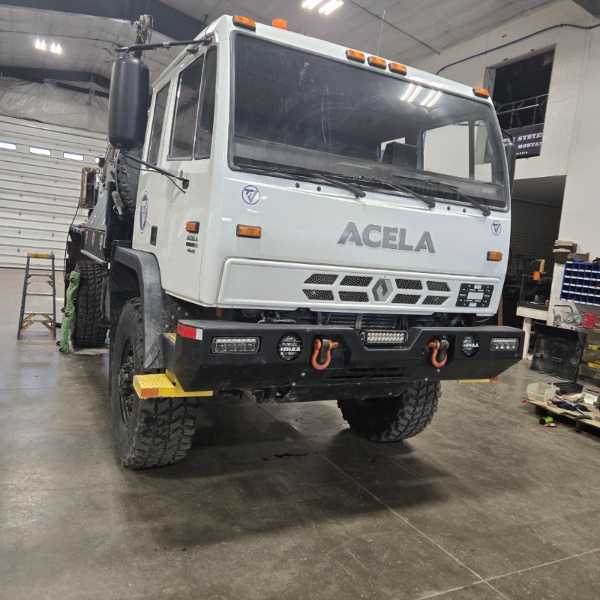
September's winner runs a drilling company in Alaska. Two seasons, 20-inch and 10-inch Black Oak light bars, temperatures down to forty below — and not one failure.
The PrizeWhat Rick Won
20-Inch Double Row LED Light Bar – Pro Series 3.0
Another 20-inch Double Row for the fleet. IP69K sealed, Osram chipsets, die-cast aluminum housing, and the same lifetime warranty behind every light we build. Rick already knows what it does in the cold.
$680 ValueIn His Own WordsWhat Rick Told Us
"Performs in extreme Alaskan conditions."
"We are a drilling company based in Alaska and have been using your 20″ and 10″ light bars for two seasons."
"Despite the extreme dark and temperatures dropping to -40 degrees during the Alaskan winter, we have had zero issues with our Black Oak LED lights. We love the product and plan to purchase more for our UTVs and additional trucks soon."
— Rick S., September 2026 Giveaway WinnerThere's a detail in there worth pausing on. Forty below is the one temperature where Fahrenheit and Celsius agree, so it doesn't matter which scale Rick meant. Either way it's the point where most gear stops being gear and starts being scrap.
Why It MattersWhy Forty Below Is the Real Test
Here's the part that surprises people: the LEDs themselves don't mind the cold. Semiconductors actually run more efficiently at low temperature — a diode that's cold produces more light per watt and lasts longer than one that's cooking. Cold is the easy part of the job.
Everything around the diode is where cheap lights die.
- Thermal cycling. A light bar running hard generates real heat inside the housing while the air outside sits at forty below. That delta, repeated every shift, expands and contracts every material in the assembly at a different rate. Solder joints fatigue. Adhesive bonds let go. This is the single biggest killer, and it only shows up after a season or two — which is exactly why Rick's two-season report means something a one-week review doesn't.
- Gasket shrink. Rubber hardens and contracts as it gets colder. A seal that passes a bench test at room temperature can pull away from its channel at -40, and the moment it does, moist air gets in. Then it warms up, condenses, and you've got water inside a sealed housing that can't get out.
- Brittle lenses. Cheap polycarbonate loses impact resistance in deep cold. Combine that with road debris, ice chunks, and gravel on a service road and a lens that would have shrugged it off in July cracks in January.
- Wiring and connectors. Insulation stiffens and cracks at the flex points. Connectors that aren't properly sealed collect ice. A lot of "light failures" in the cold are actually connection failures.
None of that is exotic engineering. It's just what you have to account for if you expect a light to survive a real winter instead of a product photo. IP69K sealing, a die-cast aluminum housing that moves predictably with temperature, and connectors built for the environment are what separate two seasons of zero issues from a box of dead lights in the shop.
The SetupRick's Fleet
| Equipment | Where It's Running |
|---|---|
| 20-Inch Light Bars | The workhorse size. Long enough to throw real distance down a service road, short enough to mount almost anywhere on a rig without hanging past the body line. |
| 10-Inch Light Bars | Tighter spots — bumpers, A-pillars, equipment mounts. Same build, same sealing, same warranty, in a package that fits where a 20 won't. |
| Coming next | More of both, for the company's UTVs and additional trucks. Rick's words, not ours — which is the review we actually care about. |
| Just added | A 20-Inch Double Row, courtesy of the September giveaway. |
Worth noting what kind of customer this is. A drilling company doesn't buy light bars because they look good on a build. They buy them because a crew that can't see is a crew that isn't working, and because every piece of equipment that fails in the field costs more to replace than it did to buy. Two seasons of reordering is a harder-won endorsement than any five-star rating.
On SiteRick's Rigs in Alaska


Why We Picked ItWhat Made This Entry Stand Out
Two Seasons, Not Two Weeks
Cold-weather failures are cumulative. Anyone can report that a light worked on day one. Rick is reporting across two full winters.
It's Their Livelihood
This isn't a weekend build. A commercial crew betting its working hours on our lights is the hardest kind of endorsement to earn.
They're Buying More
The real review isn't the stars. It's the reorder — UTVs and more trucks, after two seasons of knowing exactly what they're getting.
You Could Be Next Month's Winner
Send us a photo or a video of your Black Oak gear doing something. Every submission is a separate entry, so more photos means better odds. We announce a new winner here on the blog every month.
How It WorksEntering Takes About Two Minutes
- Take the shot. Photo or video of your Black Oak gear on your truck, UTV, boat, Jeep, or job site — whatever you run it on.
- Fill out the form. Head to the giveaway page and tell us what you're running and where.
- Upload it. Files up to 20MB each, or paste a link if it's bigger. Each submission counts as its own entry.
- Watch the blog. We pick a winner on merit every month, announce them here, and email them directly.
FAQCommon Questions
How cold can your lights actually operate?
Do you work with commercial fleets?
What does the lifetime warranty actually cover?
Can I enter the giveaway more than once?
Wrap-UpCongratulations Again, Rick
Thanks for the write-up, and thanks for putting our lights somewhere that genuinely tests them. Two seasons at forty below with nothing to report is the best thing a manufacturer can hear. Enjoy the new 20-inch Double Row, and let us know how the UTVs turn out.
To everyone else: the entry form is open right now, and next month's winner is somebody who hasn't submitted yet. Get your entry in.
