Filter Filter
Reset

Filter

Filter

8 products

8 products

Ambulance Lights

Collection: Ambulance Lights: Red and White LED Light Bars and Strobes for EMS

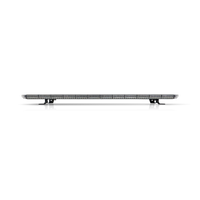
An ambulance is the one emergency vehicle whose own body blocks its own roof bar. The patient module sits behind and above the cab, so a bar on the cab roof is invisible to anyone approaching from the rear quarter, which is exactly where the next car arrives at a highway scene. That is why ambulance lighting is two layers and not one: a Low Pro on the cab for presence ahead and to the sides, and XDR-5 surface mount strobes at each corner of the box for the rear and the sides where the module hides the cab. Black Oak builds both layers on one platform. The 49 inch Low Pro is the standard cab bar on Type I and Type III units, the 55 inch covers wider medium duty cabs, and the 43 inch fits a Type II van inside the roof rails. XDR-5 heads mount at the four corners of the box, on the rear doors and in the grille, and the compact XDR-4 covers the mirrors. The Low Pro is certified to SAE J845 and SAE J595 Class 1, the intensity class specified for primary emergency vehicles, and everything is sealed to IP69K for bay washdown. Designed and engineered in Sarasota, Florida.

Take the controls: run the light bar yourself

This is the controller that ships in the box. Pick one or two colors, step through the 12 flash patterns, sweep the traffic advisor and switch the 360 degree Halo scene light on and off. Every module on a dual color bar can show either color, which is why one bar covers left and right, alternating, all of color one or all of color two.

Ambulance light colors

Red and white is the most common ambulance configuration: red for identification, white for daylight reach, intersection clearing and scene light at the loading door. Several states run red and blue on EMS, and some agencies add amber to the rear for traffic approaching a highway scene. Every Black Oak red and white bar ships red on the driver side and white on the passenger side, so the colors read as two colors at distance, and on a dual-color bar the steady-plus-flash patterns hold the driver side steady red while the passenger side flashes white. The XDR-48 is the bar for an agency that needs a third color zone, amber or white to the rear with red forward. Confirm the state code and the agency spec before ordering.

The standard ambulance package, and why each head is there

One 49 inch Low Pro on the cab. Four XDR-5 heads at the top corners of the box, because the corners are the only points on the module that are visible from the front quarter, the side and the rear quarter at once. Two XDR-5 heads on the rear doors at the height of a following driver's eye, which is the position a driver closing on a stopped unit sees before anything on the roof. Two XDR-5 in the grille for the intersection, and one XDR-4 under each mirror aimed outboard for the lane beside the unit at a scene. Each head throws 120 degrees, draws 1.5 to 1.6 amps on its own 5 amp fuse, and shares the pattern family with the bar, so the unit flashes as one system; heads on one circuit flash in unison or alternate in opposing pairs. White XDR-5 heads at the loading door double as ground lighting for the stretcher.

At the loading door

The lighting job changes when the unit stops. The crew is behind the box with the doors open, in the lane, and the warning layer has to stay visible to approaching traffic without blinding it. The Low Pro controller's 50 percent dim, or its auto day-night sensor, drops output for a night scene, and the 3-mode traffic advisor on the rear of the cab bar (left, right, center-out) tells the queue which side to pass on. The 360 degree white Halo on the cab bar, switchable front, back, left or right, floods the side of the unit; scene lighting for the sides of the box itself comes from the Black Oak scene and work light range on the same voltage and brackets.

Cab-to-body wiring

A 49 inch Low Pro draws 30 amps at full output on 12 volts, and the full strobe package adds about 14 amps across its own fused circuits; size the feed for the whole unit at once. The bar's controller lead is 12 feet standard, with 22 and 27 foot totals selectable at checkout for the run from the cab bar to a console mounted controller on a long chassis, and the 15 foot controller extension covers a remount. Every Low Pro takes 10 to 30V DC, so the same bar and heads fit a 12V van and a 24V medium duty chassis.

Complete the unit

Ambulance lights are one part of Black Oak fire and EMS lights under emergency lighting, alongside fire truck light bars and emergency strobe lights. EMS agencies and municipal fleets get volume pricing, SAE certification documentation and installer referrals: call 1-800-348-1287 or request fleet pricing. Backed by a limited lifetime warranty, see each product page for details.

What size light bar fits a Type III ambulance?

49 inch on most cutaway cabs; 55 inch on wider medium duty cabs. Measure the flat cab roof between the rails and run the bar about two inches short on each side.

Are the box strobes bright enough for daytime highway scenes?

The XDR-5 is the same head used on patrol push bumpers: six LEDs, 18 watts, 120 degrees, SAE J595 approved. Four at the box corners plus two on the rear doors is the configuration that reads from behind at highway closing speed.

Can the box strobes sync with the cab bar?

Yes. XDR heads and Low Pro bars share the same pattern family and can be wired to flash in sync or alternate.