Walk any marina after sundown and you can tell which boats were rigged by someone who thought it through. The deck is lit evenly, nobody is squinting into a bare bulb, and the person tying off the stern line can actually see the cleat. That result comes from spreader and deck lighting, and the setup that gets you there depends on your boat, your mount points, and what you actually do after dark.
Spreader light, deck light, or accent light: what is the difference
These three terms get used interchangeably at the dock, but they solve different problems.
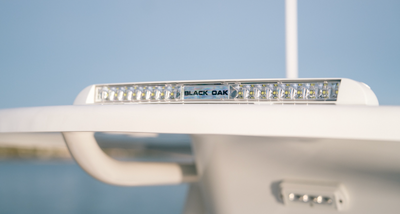
A spreader light mounts up high, on a T-top, hardtop, or radar arch, and floods the deck below it. It is the workhorse for docking, loading gear, and general after-dark visibility because one fixture covers a wide area from above.
A deck light or accent light mounts low, along the gunwale, under a hardtop, or inside a livewell or cockpit, and lights a specific zone rather than the whole boat. It is the fixture you want for reading a chart at the helm, finding tackle in a compartment, or setting a mood at anchor without lighting up the whole marina.
A spot or clamp-on light, like the GoPOD Marine Clamp On Spot Light, is the portable option: something you move to wherever the job is that night, from the transom to the bow to a friend's boat with no mount at all.

Most boats end up running a mix. A center console might carry one or two spreader lights on the T-top plus accent lights under the gunwale. A pontoon running late might lean entirely on deck-level accent lighting since there is no T-top to hang a spreader from.
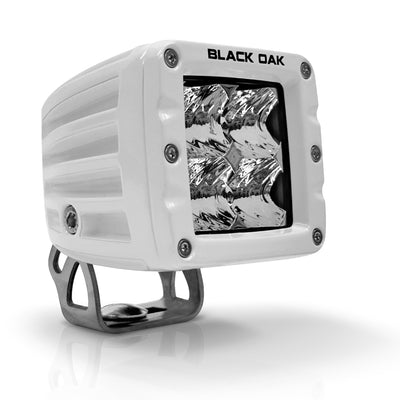
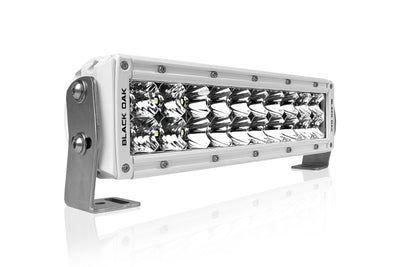
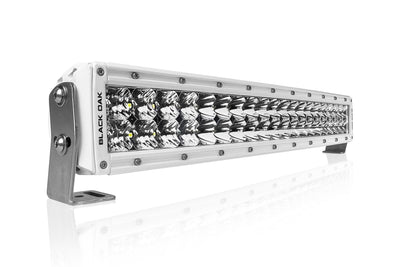
Shop the full lineup in Black Oak's marine LED light bars and lighting collection: flush mount and bracket mount options in both spreader and accent styles, sized for everything from a jon boat to a sportfish. For a full breakdown across sizes and mounting styles on the light bar side, see our marine LED light bar buying guide.
Flush mount vs. bracket mount
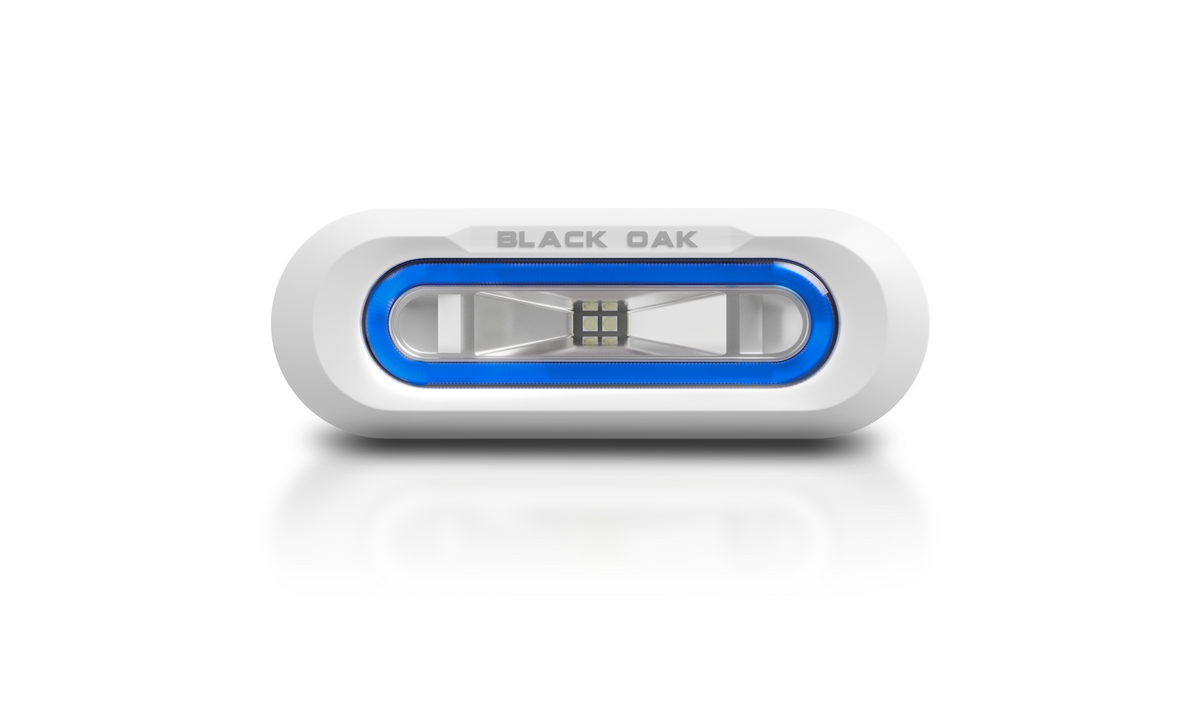
Both of Black Oak's Low Pro spreader lights come in flush mount and bracket mount versions, and the choice usually comes down to what surface you are attaching to and how much of a profile you want sticking out.

Flush mount sits nearly level with the surface it is set into, which keeps the fixture out of the way of lines, rigging, and boarding traffic. It takes a cutout, so it is the better call when you are building the mount point from scratch or already planning other flush-mounted electronics nearby. Shop the Low Pro Marine Spreader Light, Flush Mount.

Bracket mount bolts to a flat or angled surface with no cutout required, which makes it the faster retrofit for an existing T-top or hardtop where you do not want to cut into the structure. Both housings on the Low Pro line carry the same output and the same waterproof rating; the difference is entirely how they attach. Shop the Low Pro Marine Spreader Light, Bracket Mount.
Reading the specs: lumens, beam angle, and color
A single 2-inch marine spreader light in scene or flood optics throws a wide, even pattern across a cockpit rather than a hot spot in the middle, which is what you want for deck work rather than distance lighting. The 4-inch spreader steps up output for a larger deck or a bigger boat, still in the same wide beam pattern.
Color matters more on the water than people expect. Pure white output is the standard choice for deck work and docking because it renders colors accurately and is what most boaters are used to reading a deck by. Some boaters running late-night approaches prefer to keep a secondary red or amber light on hand near the helm, since red preserves your eyes' adjustment to the dark far better than white does if you need to step away from a lit console and look out at open water. That is a separate conversation from spreader lighting itself, but it is worth knowing the two solve different problems: spreader lights make the deck usable, and preserving your night vision at the helm is about protecting your eyes from that same brightness.
Wiring and power draw
Every Black Oak spreader and accent light in this lineup runs on a straightforward 12V-24V circuit with a sealed wiring harness rated for salt water. A single 2-inch unit draws a modest current, low enough that most boats can add two or three spreader and accent lights to an existing circuit without running new wire back to the battery, though anyone stacking lights across multiple zones (bow, cockpit, transom) should size the switch and fuse to the combined draw rather than each fixture individually. If you are wiring more than two or three fixtures at once, a dedicated marine accent light controller with its own switch keeps the install clean and lets you kill the deck lights independently from your running lights.
Waterproofing: what IP69K actually means for a boat
Every fixture in this collection carries an IP69K rating, built for high-pressure washdown and full submersion resistance, not just splash resistance. On a boat that matters in two ways: the obvious one is rain and spray, but the more common failure point is actually the deck wash-down hose after a day of fishing, which puts a fixture through more direct pressure than a rainstorm ever will. A fixture rated only for basic water resistance can fail exactly there.
Picking a setup by boat type
A center console or bay boat running charters or long days on the water typically does best with one or two spreader lights on the T-top for full-deck coverage, plus a pair of low-mount accent lights near the livewell and cockpit sole for close work after the spreaders are off.
A pontoon or deck boat used for evening cruises leans toward accent lighting under the gunwale and around the seating area, since there is rarely a T-top to hang a spreader from and the goal is ambiance and safe footing rather than work-light output.
A jon boat or duck boat rig, built around night runs to a blind or a gigging spot, usually wants a single compact spreader or clamp-on light near the bow for navigation and loading, kept separate from any dedicated hunting or gigging lights already on the rig; see the duck boat lighting setup guide for how that combination is typically wired on a smaller hull.
Frequently asked questions
Do I need both a spreader light and deck accent lights? Not always. A boat that is only ever docked in a lit marina and used during the day may only need one or the other. A boat used for early starts, late returns, or overnight anchoring benefits from both: the spreader for full coverage, the accents for close work without blinding everyone on deck.
Will these lights drain my battery overnight? Sized correctly and switched off when not in use, no. These are not designed to run continuously for hours unattended; they are work and safety lighting, switched on when needed.
Can I mix flush mount and bracket mount on the same boat? Yes. It is common to flush mount at a build point that was planned in advance and bracket mount at a retrofit point on existing structure. The output and rating are identical across both housings.
Shop the Low Pro Marine Spreader Light, Flush Mount, the Low Pro Marine Spreader Light, Bracket Mount, and the full Marine LED Lights & Boat Light Bars collection for spreader, accent, and pod options sized for your boat.
Black Oak LED spreader and accent lights are designed and engineered in Sarasota, Florida.