In the beginning of automotive lighting, halogen lights were the only type in use. Later, HID lights started being used, and, most recently, LED lights have become the most popular choice for most motorists. In this guide, we will take a look at each type of automotive lighting and discuss the various pros and cons that each one has.
Halogen
Halogen lights can be compared to a standard light bulb. They are made using a wire filament that is heated up via an electrical current until it begins to brightly glow. The only real difference is that a halogen light is filled with a halogen gas such as iodine or bromine, thus giving it its name. While halogen lights still enjoy some degree of popularity among automotive lighting, they do have some major drawbacks. The first is that the light they produce is yellowish in color, which is not nearly as good for visibility as a purely white light. Second, the filaments inside halogen lights are very sensitive to bumps and vibrations, meaning they are not a very durable option. If you are planning to off-road on a bumpy trail, halogen lights may not be the best choice.
HID
HID (which stands for High Intensity Discharge) lights produce light by evaporating metal salts inside a chamber filled with xenon gas before striking an arc between two electrodes. The result is an ultra-intense, bright, white light that quickly gained popularity among motorists in the 1990s. Since HID lights are not built using fragile filaments, they are also much more durable than their halogen counterparts. HID lights do, however, come with their own disadvantages. To begin with, they are quite expensive. HID lights also have a terribly large amp draw and a life expectancy that simply cannot compare with modern LED lights. On average, the life span of an HID light is just 2,000 hours of operation.
LED
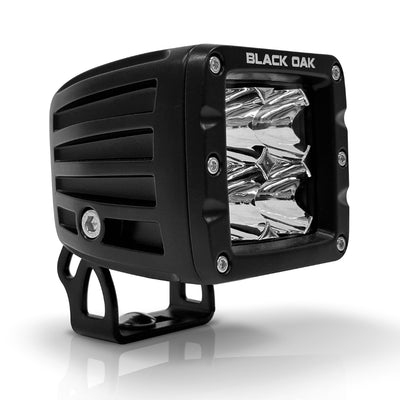
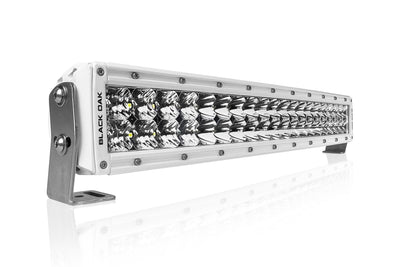
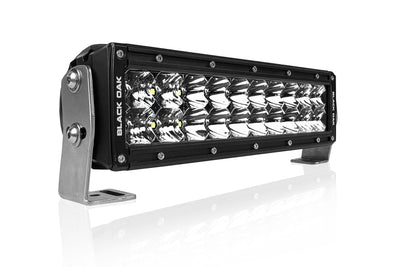
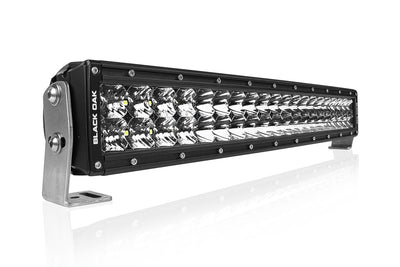
LED (Light Emitting Diode) lights are the current king of the automotive lighting options, and with good reason. LED lights operate on a completely solid state, making them incredibly durable, and work by dropping electrons down to a lower energy level, causing them to emit a bright, white light that provides far more illumination than halogen lights and nearly the same amount of illumination as HID lights. While HID lights may rival LED lights for brightness, the lifespan of LEDs is where they really gain their advantage.On average, an LED light will last for 50,000 hours of operation, compared to just 2,000 for an HID light. Along with this, LED lights have a very low amp draw, making them much more efficient than the competition.Lastly, they are quite durable and not fazed by bumps and vibrations.
While Halogen and HID lights are still viable options, LEDs remain the best choice for automotive lighting. Their durability, brightness, and lifespan make them the most effective light of the three.